

Announcements
[TV Commentary] Satoshi Ikeuchi Discusses the Iran Situation and Gulf States on NHK’s Kokusai Hodo 2026

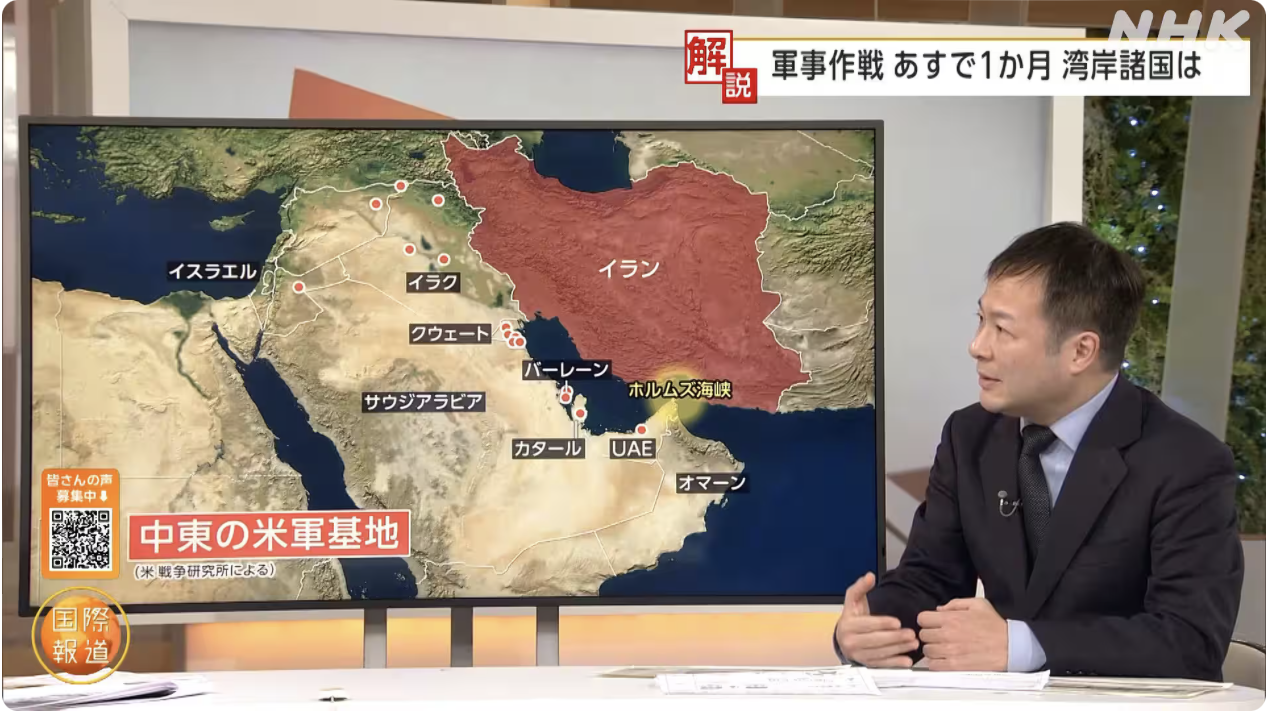
Professor Satoshi Ikeuchi of ROLES, Research Center for Advanced Science and Technology (RCAST), The University of Tokyo, appeared on NHK’s Kokusai Hodo 2026 (International Report 2026), broadcast on March 27, 2026, to provide analysis on the Iran War and the positions of the Gulf states. The segment was later published on NHK’s website on April 2, 2026, under the title “Commentary by Professor Satoshi Ikeuchi on the Iran Situation: One Month into the Military Operation—Where Do the Gulf States Stand?”
The program examined developments one month after the United States and Israel launched military operations against Iran on February 28, 2026. Topics included the military and political effects of the operation, Iran’s counterattacks, the de facto closure of the Strait of Hormuz, indirect U.S.–Iran communication, and the differing positions of Gulf states affected by the conflict.
Professor Ikeuchi explained that, from a purely military perspective, the United States and Israel had largely carried out the attacks they had planned against key Iranian targets. However, he noted that they had not yet achieved the political and strategic outcomes they sought through the use of military force, including regime change, the suppression of Iran’s retaliatory capacity, and the reopening of the Strait of Hormuz.
By contrast, Professor Ikeuchi observed that Iran, despite the large gap in military capabilities between itself and the United States and Israel, had succeeded in generating significant political and strategic effects through the limited military means available to it. In particular, Iran’s ability to effectively close the Strait of Hormuz has allowed it to translate relatively limited military power into substantial political leverage. He warned that if the United States and Israel are unable to achieve their strategic objectives in the short term, they may face pressure to move toward further military options, including the deployment of ground forces, which could lead to a much longer conflict.
The program also discussed the conditions reportedly exchanged between the United States and Iran through indirect channels. Professor Ikeuchi explained that the U.S. demands largely repeated the conditions it had advanced before the outbreak of the war: Iran should halt its nuclear development, limit or give up its missile and drone capabilities, and stop supporting groups such as Hamas and Hezbollah that pose threats to Israel. A new condition had also emerged from the course of the war: the reopening of the Strait of Hormuz.
On the Iranian side, Professor Ikeuchi noted that Tehran was making expansive demands from what it perceived as a relatively strong position. These included the lifting of economic sanctions, guarantees that Iran would not be attacked again, compensation for war damages, and the legitimization of Iran’s control over the Strait of Hormuz. He pointed out that while Iran had suffered severe damage in the initial phase of the war, including the killing of senior state and military leaders and the destruction of major military facilities, it was also under domestic pressure to show what it had gained in return for those losses.
Professor Ikeuchi then analyzed the differing positions of the Gulf Arab oil-producing states, including Saudi Arabia, the United Arab Emirates, Bahrain, Oman, Qatar, and Kuwait. He emphasized that these states are of vital importance to Japan’s energy security, and that the impact of the war on them is therefore a central issue for Japan.
He explained that the UAE and Bahrain, which normalized relations with Israel through the Abraham Accords in 2020, are more likely to take a hardline position toward Iran. Having suffered significant Iranian attacks and already positioned themselves closer to Israel, these states may conclude that they have little choice but to align more fully with the United States and Israel unless Iran is decisively weakened after the war.
By contrast, Professor Ikeuchi argued that Saudi Arabia and Qatar are more concerned that further weakening or destabilizing Iran could spread instability across the region. They also fear that if Israel becomes too dominant, their relationship with Israel could become more subordinate. For this reason, while they must respond firmly to Iranian attacks, they are reluctant to join direct military action against Iran. Instead, they are seeking early ceasefire arrangements and de-escalation by involving the United States as well as regional powers such as Pakistan, Turkey, and Egypt.
Oman, meanwhile, was described as maintaining dialogue with Iran and continuing its role as a mediator. Professor Ikeuchi noted that Oman had played a mediating role before the outbreak of the war and had also taken a more critical stance toward the U.S.–Israeli attacks, emphasizing the need for dialogue with Iran.
Professor Ikeuchi also commented on the future of the Abraham Accords. He argued that for the UAE and Bahrain, normalization with Israel has already become a strategic choice and is likely to remain in place after the war. However, Saudi Arabia’s accession to the Abraham Accords would carry much broader implications, as it could signal that the Gulf Arab oil-producing states as a whole are moving toward Israel. For Saudi Arabia, such a step remains difficult, as it could draw the kingdom more directly into confrontation with Iran and other Arab actors.
In conclusion, Professor Ikeuchi suggested that the Gulf states may increasingly diverge in their regional strategies: the UAE and Bahrain moving closer to Israel, while Saudi Arabia and Qatar seek to maintain a balance between Iran and Israel. He emphasized that all of these states seek an early ceasefire, and that the stability of the Gulf remains a vital issue for Japan.
For more details, please see the NHK segment below (in Japanese):
Commentary by Professor Satoshi Ikeuchi on the Iran Situation: One Month into the Military Operation—Where Do the Gulf States Stand?
https://www.web.nhk/tv/an/kokusaihoudou/pl/series-tep-8M689W8RVX/bl/pDAZdogaO5/bp/p5Xov0zOlK
The program examined developments one month after the United States and Israel launched military operations against Iran on February 28, 2026. Topics included the military and political effects of the operation, Iran’s counterattacks, the de facto closure of the Strait of Hormuz, indirect U.S.–Iran communication, and the differing positions of Gulf states affected by the conflict.
Professor Ikeuchi explained that, from a purely military perspective, the United States and Israel had largely carried out the attacks they had planned against key Iranian targets. However, he noted that they had not yet achieved the political and strategic outcomes they sought through the use of military force, including regime change, the suppression of Iran’s retaliatory capacity, and the reopening of the Strait of Hormuz.
By contrast, Professor Ikeuchi observed that Iran, despite the large gap in military capabilities between itself and the United States and Israel, had succeeded in generating significant political and strategic effects through the limited military means available to it. In particular, Iran’s ability to effectively close the Strait of Hormuz has allowed it to translate relatively limited military power into substantial political leverage. He warned that if the United States and Israel are unable to achieve their strategic objectives in the short term, they may face pressure to move toward further military options, including the deployment of ground forces, which could lead to a much longer conflict.
The program also discussed the conditions reportedly exchanged between the United States and Iran through indirect channels. Professor Ikeuchi explained that the U.S. demands largely repeated the conditions it had advanced before the outbreak of the war: Iran should halt its nuclear development, limit or give up its missile and drone capabilities, and stop supporting groups such as Hamas and Hezbollah that pose threats to Israel. A new condition had also emerged from the course of the war: the reopening of the Strait of Hormuz.
On the Iranian side, Professor Ikeuchi noted that Tehran was making expansive demands from what it perceived as a relatively strong position. These included the lifting of economic sanctions, guarantees that Iran would not be attacked again, compensation for war damages, and the legitimization of Iran’s control over the Strait of Hormuz. He pointed out that while Iran had suffered severe damage in the initial phase of the war, including the killing of senior state and military leaders and the destruction of major military facilities, it was also under domestic pressure to show what it had gained in return for those losses.
Professor Ikeuchi then analyzed the differing positions of the Gulf Arab oil-producing states, including Saudi Arabia, the United Arab Emirates, Bahrain, Oman, Qatar, and Kuwait. He emphasized that these states are of vital importance to Japan’s energy security, and that the impact of the war on them is therefore a central issue for Japan.
He explained that the UAE and Bahrain, which normalized relations with Israel through the Abraham Accords in 2020, are more likely to take a hardline position toward Iran. Having suffered significant Iranian attacks and already positioned themselves closer to Israel, these states may conclude that they have little choice but to align more fully with the United States and Israel unless Iran is decisively weakened after the war.
By contrast, Professor Ikeuchi argued that Saudi Arabia and Qatar are more concerned that further weakening or destabilizing Iran could spread instability across the region. They also fear that if Israel becomes too dominant, their relationship with Israel could become more subordinate. For this reason, while they must respond firmly to Iranian attacks, they are reluctant to join direct military action against Iran. Instead, they are seeking early ceasefire arrangements and de-escalation by involving the United States as well as regional powers such as Pakistan, Turkey, and Egypt.
Oman, meanwhile, was described as maintaining dialogue with Iran and continuing its role as a mediator. Professor Ikeuchi noted that Oman had played a mediating role before the outbreak of the war and had also taken a more critical stance toward the U.S.–Israeli attacks, emphasizing the need for dialogue with Iran.
Professor Ikeuchi also commented on the future of the Abraham Accords. He argued that for the UAE and Bahrain, normalization with Israel has already become a strategic choice and is likely to remain in place after the war. However, Saudi Arabia’s accession to the Abraham Accords would carry much broader implications, as it could signal that the Gulf Arab oil-producing states as a whole are moving toward Israel. For Saudi Arabia, such a step remains difficult, as it could draw the kingdom more directly into confrontation with Iran and other Arab actors.
In conclusion, Professor Ikeuchi suggested that the Gulf states may increasingly diverge in their regional strategies: the UAE and Bahrain moving closer to Israel, while Saudi Arabia and Qatar seek to maintain a balance between Iran and Israel. He emphasized that all of these states seek an early ceasefire, and that the stability of the Gulf remains a vital issue for Japan.
For more details, please see the NHK segment below (in Japanese):
Commentary by Professor Satoshi Ikeuchi on the Iran Situation: One Month into the Military Operation—Where Do the Gulf States Stand?
https://www.web.nhk/tv/an/kokusaihoudou/pl/series-tep-8M689W8RVX/bl/pDAZdogaO5/bp/p5Xov0zOlK



Related News
Announcements
2026.10.01 (Thu.)
 Research Unit on the New Persian Gulf Order
Announcements
2026.07.29 (Wed.)
Announcements
2026.07.25 (Sat.)
Announcements
2026.07.07 (Tue.)
Announcements
2026.07.07 (Tue.)